Colorado Fluorite Field Guide: Jamestown, Northgate, Browns Canyon, and Wagon Wheel Gap
Colorado fluorite does not come from one geologic recipe. In Jamestown it formed deep beside an unusual granite pluton. Near Northgate it filled faults during early Rio Grande rifting. At Browns Canyon it coated breccia in a shallow hot-spring-style system. At Wagon Wheel Gap it formed beside the Creede caldera with barite, pyrite, and multiple stages of banding.
That variety is exactly why fluorite is useful to a field geologist. Learn to identify the mineral, then look at its texture, host rock, alteration, and structural setting. The same calcium-fluoride mineral can tell four very different stories.
This guide covers the geology and field clues at four classic Colorado districts. It is not a list of open collecting sites. Historic production, a public road, or public-land ownership does not automatically grant permission to collect.
Fluorite or Fluorspar?
Fluorite is the mineral calcium fluoride, CaF₂. Fluorspar is the mining and industrial term for fluorite-rich ore, whether the fluorite is in clean crystals, massive bands, or fine-grained material.
Colorado was historically a major fluorspar producer. Jamestown, Northgate, Browns Canyon, and Wagon Wheel Gap were among the state’s important districts. Their output was largely industrial material rather than perfect cabinet specimens.
The field-identification checklist
Color is the least reliable test. Fluorite can be purple, green, blue, yellow, white, colorless, or mixed. Use several properties together:
| Property | Fluorite field clue |
|---|---|
| Composition | CaF₂ |
| Crystal system | Isometric; cubes are common |
| Hardness | Mohs 4; softer than a steel knife and quartz, harder than calcite |
| Cleavage | Four perfect directions, commonly producing triangular faces or octahedral fragments |
| Streak | White |
| Luster | Vitreous when crystalline; dull to waxy when massive |
| Specific gravity | About 3.2; noticeably heavy for a nonmetallic mineral |
| Acid reaction | No fizz in weak acid, unlike calcite |
| UV response | Variable; some fluoresces strongly, some weakly, and some not at all |
The best quick combination is hardness + cleavage + heft. Fluorite scratches calcite but is scratched by a knife. Broken pieces may show repeated triangular cleavage faces. A piece feels heavier than quartz of the same size.
Myth check: Not all fluorite fluoresces. A dark UV response does not rule it out. The word “fluorescence” came from fluorite, but trace elements and defects control whether an individual specimen glows.
Handle it gently
Fluorite is brittle and has four directions of perfect cleavage. A clean cube can turn into a pile of octahedral chips from one careless impact. Wrap specimens individually and support the matrix, not the crystal.
Some colored fluorite can fade after prolonged sunlight or heat exposure. Do not test thermoluminescence by heating a collectible specimen. Store colored material away from direct window light.
Jamestown: Fluorite from a Deep Granite-Related System
The Jamestown district sits northwest of Boulder and became one of Colorado’s leading fluorspar districts. The fluorite is associated with the Porphyry Mountain sodic granite pluton, emplaced about 54–56 million years ago.
USGS work documents fluorite in several forms:
- As a primary component of the pluton
- In discrete veins
- In breccia pipes
- In dikelike fluorite and vanadium-mica veins
- In fluorite-rich zones within the granite itself
Fluid-inclusion work indicates formation temperatures around 250–375°C and very saline fluids. That is hotter and deeper than the shallow epithermal textures at Browns Canyon or Wagon Wheel Gap.
What to notice in the field
- Sodic intrusive host rock: Light felsic rock with quartz and feldspar
- Breccia texture: Angular wall-rock fragments cemented by later minerals
- Dikelike geometry: Tabular fluorite-rich zones cutting older rock
- Multiple fluorite settings: Not every fluorite occurrence will look like a clean open-space vein
Jamestown teaches an important lesson: a fluorite-rich zone can be part of the intrusive rock as well as a later fracture filling. Do not assume every fluorite piece came from a simple vein.
Access reality
Jamestown is a lived-in mountain community with private parcels, patented mining ground, historic workings, and potential active claims. Historic mine names in a report are not collecting invitations. Verify ownership through county records, current federal claims through BLM MLRS, and access with the landowner or managing agency.
Northgate and Crystal: Fault-Hosted Fluorite in North Park
The Northgate district lies near the Wyoming line in northern Jackson County. The nearby Crystal district sits along the eastern Park Range. Both record Neogene faulting and hydrothermal circulation, but their vein chemistry and alteration are not identical.
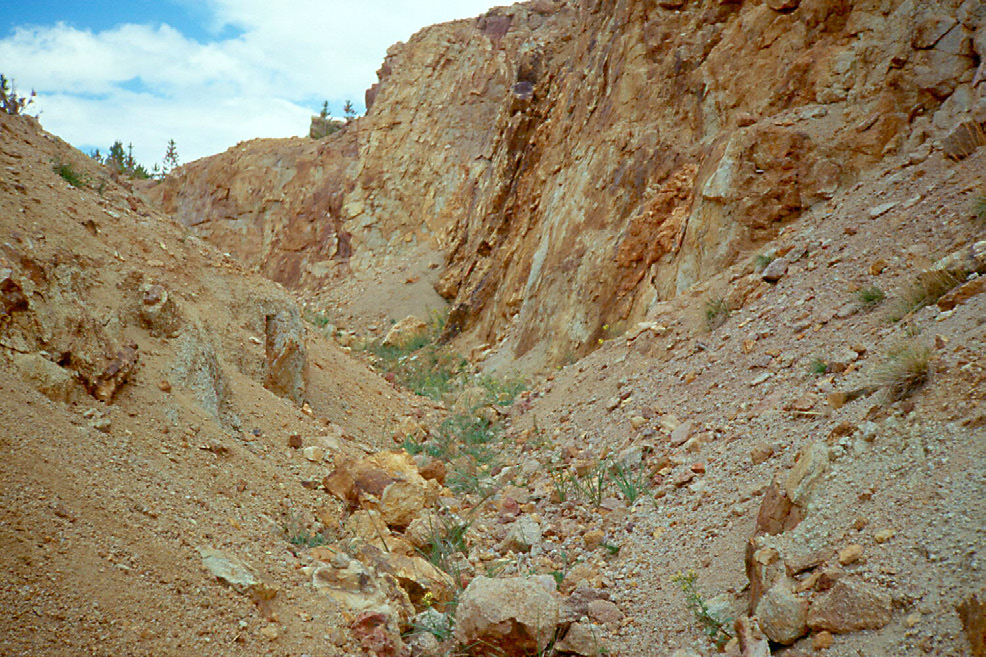
Northgate
Northgate was one of Colorado’s largest fluorspar-producing districts. Northwest-striking veins cut Mesoproterozoic quartz monzonite, older gneiss, and Eocene–Oligocene sedimentary rocks. Mining commonly followed long linear veins with open cuts.
The USGS report separates two broad vein styles:
- Western Gero–Penber/Springer system: More early pyrite and quartz, followed by brecciation and coarse-crystalline to colloform fluorite
- Eastern Fluorite–Camp Creek system: Less pyrite and quartz overall, stronger hematite and manganese-oxide alteration, plus fluorite in veins and tension fractures
The principal veins formed after deposition of the North Park Formation, likely during middle to late Miocene fault activity.
Crystal district
Crystal district veins cut the Mount Ethel granite and follow north-northwest faults. Vein contacts are sharp. Wall rock commonly shows hematite and limonite staining but little silicification.
Fluorite textures include:
- Crystalline, radiating growth
- Visible growth bands
- Mammillary or rounded youngest-stage surfaces
- Earlier chalcedony
- Bladed calcite textures indicating boiling
What to notice in the field
| Clue | Northgate lesson | Crystal lesson |
|---|---|---|
| Structure | Long fault-controlled veins and open cuts | Sharp veins following faults in granite |
| Alteration | Pyrite-quartz or hematite-manganese zones | Strong iron staining, little silicification |
| Texture | Coarse crystalline through colloform | Radiating, growth-banded, mammillary |
| Associated minerals | Quartz, pyrite, manganese oxides | Chalcedony and bladed calcite |
Access reality
The USGS study received permission to enter an inactive Northgate mining area. That research access does not transfer to the public. North Park contains private ranches, patented mine ground, public land, and current claims. Verify all three before leaving home: ownership, claim status, and legal road access.
Browns Canyon: Shallow Epithermal Fluorite
The Browns Canyon fluorspar district lies west of the Arkansas River, roughly 14 kilometers north of Salida. Mining continued until about 1949.
The veins formed along steep northwest-striking faults that juxtapose Proterozoic granite against younger volcanic and sedimentary rocks. The most likely mineralization window is about 14–11 million years ago, during Rio Grande rift-related faulting.
USGS descriptions emphasize shallow open-space textures:
- Massive botryoidal to finely crystalline fluorite
- Fluorite coating breccia fragments
- Horizontal banding in late open spaces
- Repeated brecciation
- Quartz, chalcedony, opal, minor pyrite and calcite
- Iron and manganese oxides
- Barite
These textures suggest formation close to the ancient surface, possibly in a system where hydrothermal water reached the surface as hot springs.
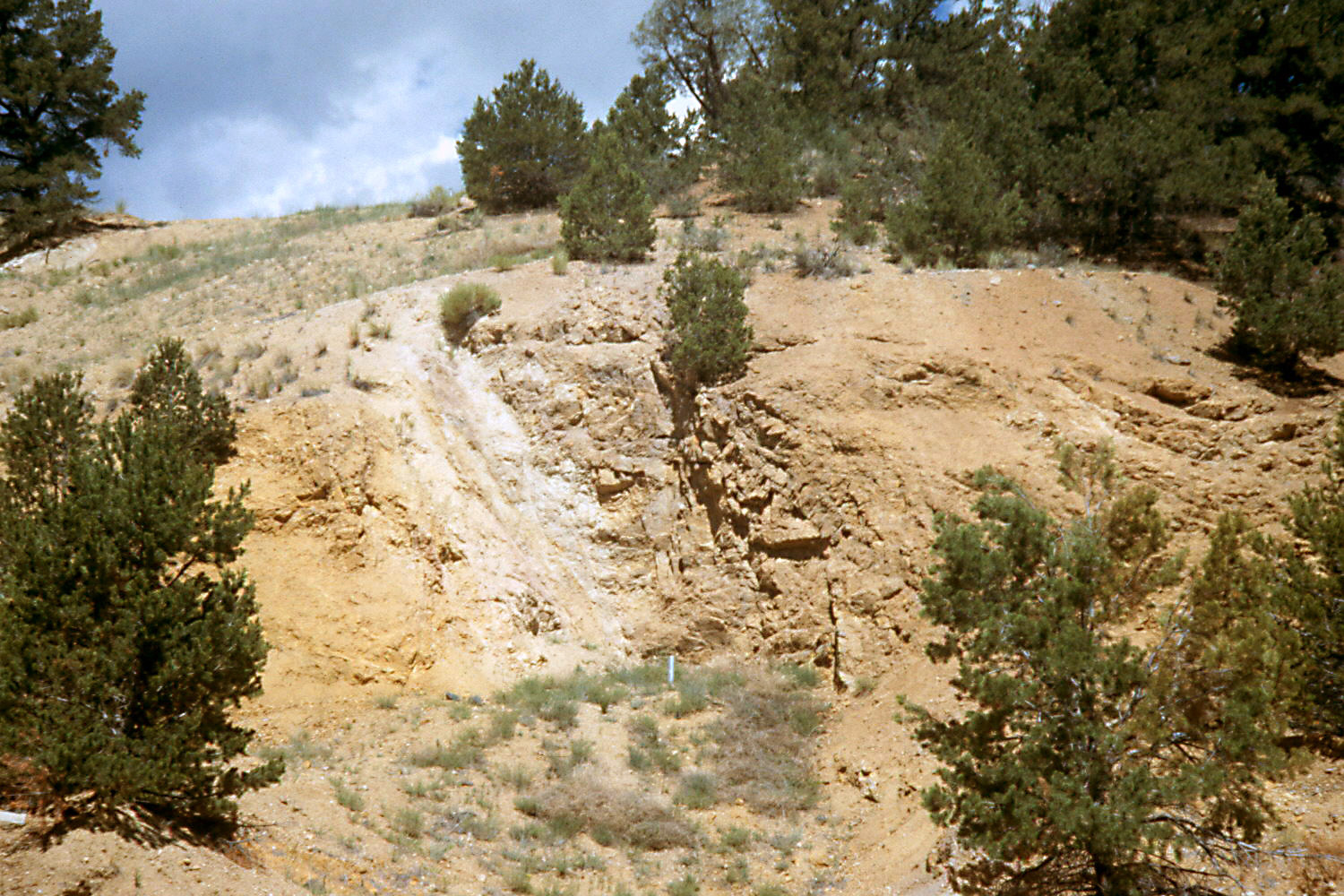
What to notice in the field
- Botryoidal surfaces: Rounded, grape-like forms rather than sharp cubes
- Cemented breccia: Angular pieces coated or joined by fluorite
- Horizontal bands: A gravity-sensitive open cavity filled in stages
- Limited wall-rock alteration: Strong vein filling but only narrow alteration beside it
- Fault contact: Different rock units placed abruptly against one another
Access reality
Browns Canyon includes a national monument, a wilderness study area, BLM parcels, private land, roads, and historic claims. The Browns Canyon WSA page provides current management information, but it does not turn historic mines into collecting sites.
Contact the BLM Royal Gorge Field Office before planning any mineral collection. Verify the exact parcel and current claims in MLRS. Do not enter old cuts, adits, or pits.
Wagon Wheel Gap: Banded Fluorite and Barite beside the Creede Caldera
Wagon Wheel Gap lies southeast of Creede in Mineral County, just outside the margin of the 27-million-year-old Creede caldera. The district produced high-grade fluorspar during the first half of the twentieth century and has been inactive for decades.
The veins cut roughly 27-million-year-old volcanic rocks. They generally strike east and dip steeply south. Wall rock is intensely brecciated and silicified, locally for more than 200 meters into the hanging wall.
The veins contain:
- Coarse- to fine-grained fluorite
- Repeated fluorite bands
- Barite crystals reaching 5–10 centimeters in upper vein zones
- Fine-grained pyrite in lower wall rocks
- Orange clay in upper exposed zones
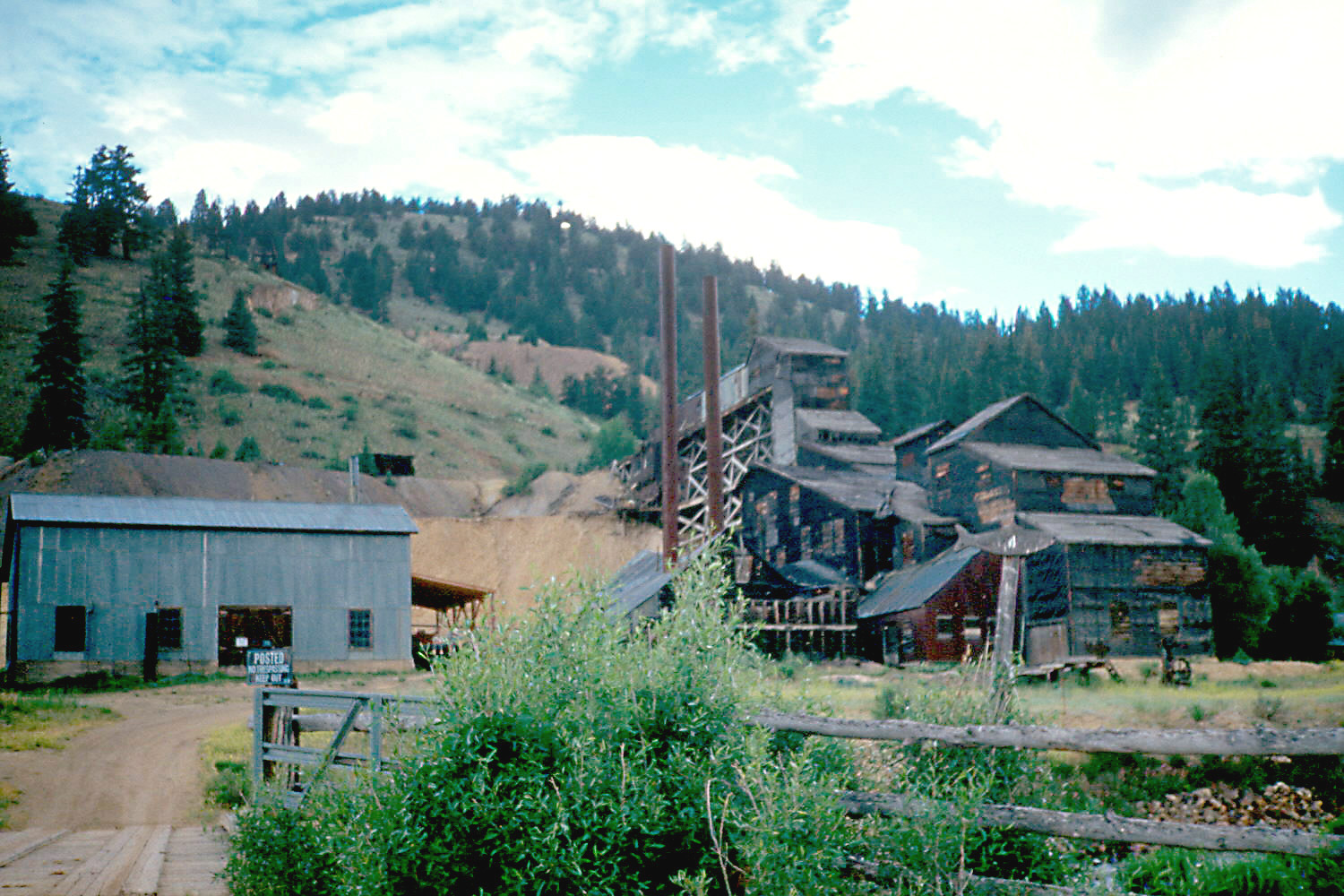
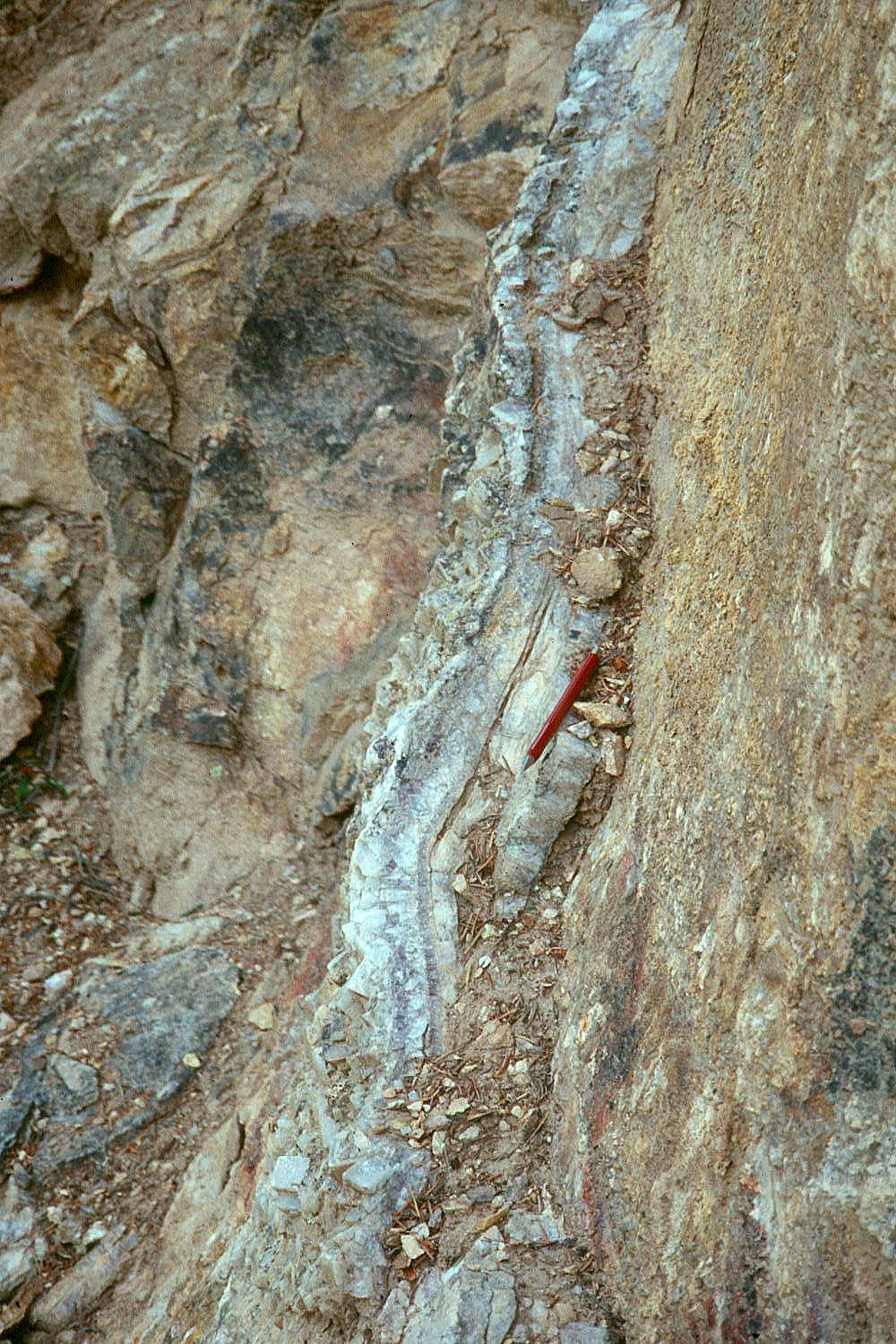
The fluorite had formed by roughly 21 million years ago. The system may record fault plumbing, east-draining groundwater, and high regional heat flow during early Rio Grande rifting. Modern hot springs follow the same broader structural corridor.
What to notice in the field
- Wide, steep veins cutting volcanic rock
- Intense brecciation and silicification near faults
- Repeated fluorite bands indicating multiple fluid pulses
- Coarse barite intergrown with fluorite
- Vertical change: More pyrite lower in the system, more orange clay in upper exposures
The Wagon Wheel Gap Interpretive Site is open year-round when snow allows and is the safest public starting point for understanding the area. It is an interpretive stop, not permission to collect at the historic fluorite mine.
Four Districts, Four Field Models
| District | Host and age | Typical field texture | Main lesson |
|---|---|---|---|
| Jamestown | 54–56 Ma sodic granite system | Intrusive fluorite, veins, breccia pipes | Fluorite can be magmatic and hydrothermal |
| Northgate/Crystal | Miocene rift-related faults in granite, gneiss, and sediments | Coarse, colloform, radiating, growth-banded | Faults and wall-rock alteration organize the veins |
| Browns Canyon | 14–11 Ma shallow rift-related veins | Botryoidal, breccia coatings, horizontal bands | Open-space texture records a shallow epithermal system |
| Wagon Wheel Gap | About 21 Ma veins in Oligocene volcanic rocks | Banded fluorite with coarse barite | Caldera-margin faults carried repeated fluid pulses |
A Responsible Fluorite Trip Workflow
Before leaving home
- Identify the exact parcel, not just the district name.
- Check surface ownership with county records and an ownership map.
- Check current federal mining claims in BLM MLRS.
- Contact the managing BLM or USFS office for current closures and collection rules.
- Obtain written permission for private land or an active claim.
- Confirm legal road access. Public land behind private gates is not automatically accessible.
In the field
- Use hand tools only unless the managing agency explicitly authorizes more.
- Stay out of open cuts, adits, stopes, and unstable mine waste.
- Do not remove material from historic structures or archaeological features.
- Photograph vein texture before collecting loose material.
- Record the host rock, alteration, vein orientation, and exact legal location.
- Wrap fluorite separately to protect its cleavage surfaces.
- Backfill any authorized small hole and pack out everything.
The Colorado Geological Survey prospecting guidance is blunt: collecting from a mining claim without permission is legally theft, and private-land access requires landowner approval. Treat that as the baseline.
Common Fluorite Mistakes
“It is purple, so it must be fluorite.”
Purple quartz, calcite, glass slag, and other materials can fool you. Test hardness and cleavage.
“It glows under UV, so it must be fluorite.”
Many minerals fluoresce, and many fluorite specimens do not.
“The old mine is inactive, so it is open.”
Inactive is an economic condition, not an access status. The land can still be private, patented, claimed, closed, or dangerous.
“Public land means the minerals are free.”
An active unpatented claim gives the claimant rights to the valuable mineral deposit even though the public may still cross the surface.
“A clean cube is tough.”
Fluorite is soft and cleaves perfectly. The prettier the crystal, the more carefully it needs to be packed.
Sources and Further Reading
- USGS Scientific Investigations Report 2010-5113: Fluorine, Fluorite, and Fluorspar in Central Colorado
- USGS: Fluorine chapter, Critical Mineral Resources of the United States
- Colorado Geological Survey Bulletin 18: Fluorspar Deposits of Colorado
- Colorado Geological Survey: Prospecting
- BLM: Rockhounding on Public Lands
- Rio Grande National Forest: Wagon Wheel Gap Interpretive Site
- BLM: Browns Canyon Wilderness Study Area
For more on Colorado’s geologic systems and field identification, start the free Colorado Field Geology for Prospectors course. For mapping, ownership, claims, and Casual Use, see Module 8: Maps, Claims, and Legal Access.