Lake George's Amazonite + Smoky Quartz: Why the Crystal Peak District Produces World-Class Specimens
In June 1997, a crew from Collectors Edge Minerals opened a pocket two meters beneath the surface at the Two Point Mine near Lake George. A tree root had grown through the cavity, weaving between crystals that had sat undisturbed for a billion years. Over eight days they pulled out more than 100 fine amazonite-smoky quartz groups, the single largest haul of specimen-grade material the Lake George region had seen in over a century of collecting.
They called it the Tree Root Pocket. And it’s just one chapter in a story that makes the Crystal Peak district one of the most productive mineral collecting areas in the world.
Why This Spot
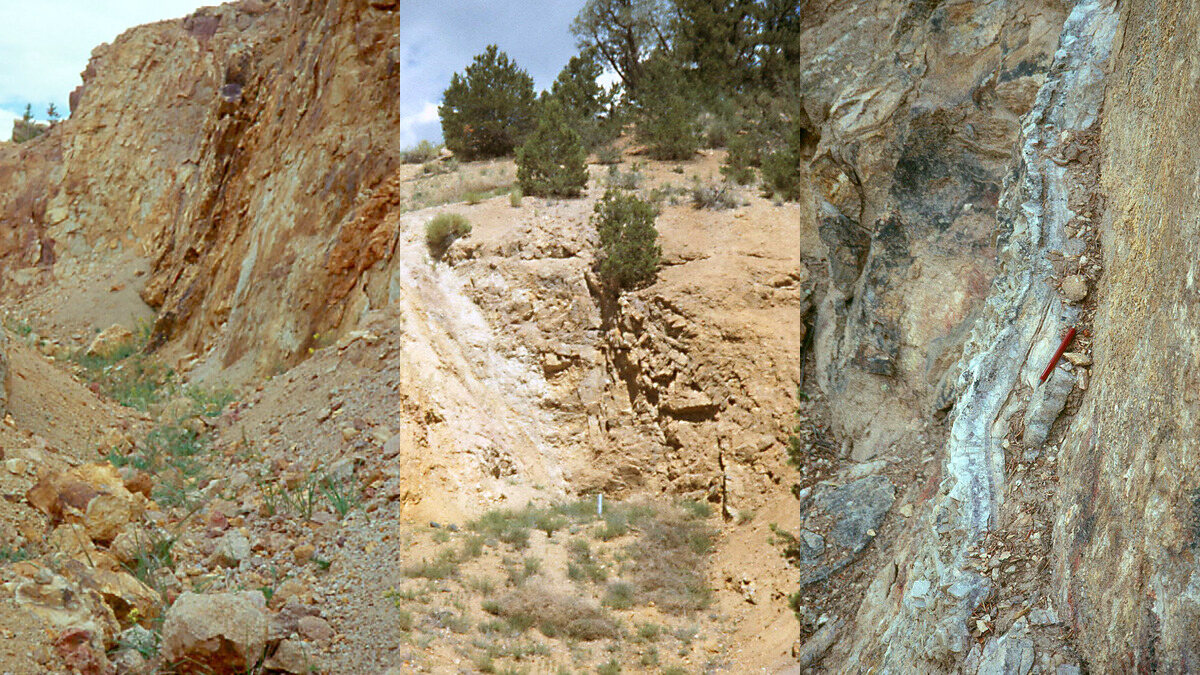
The Crystal Peak Mining District sits north of Florissant in Teller County and extends into the Lake George area of Park County. It’s all part of the Pikes Peak batholith, a massive body of Precambrian granite that intruded into the crust roughly 1.03 billion years ago. As the granite cooled, pockets of gas and residual melt formed pegmatite dikes with coarse crystals of quartz, feldspar, and mica.
What makes the Lake George intrusive center special is its position on the western flank of the batholith, where later intrusions remelted the edges and created swarms of pegmatites packed with miarolitic cavities. These gas-pocket voids are where the crystals grew. Where the pegmatites intersect north-south trending fault systems, they balloon into dome-shaped lenses up to three meters across, and that’s where the best pockets form.
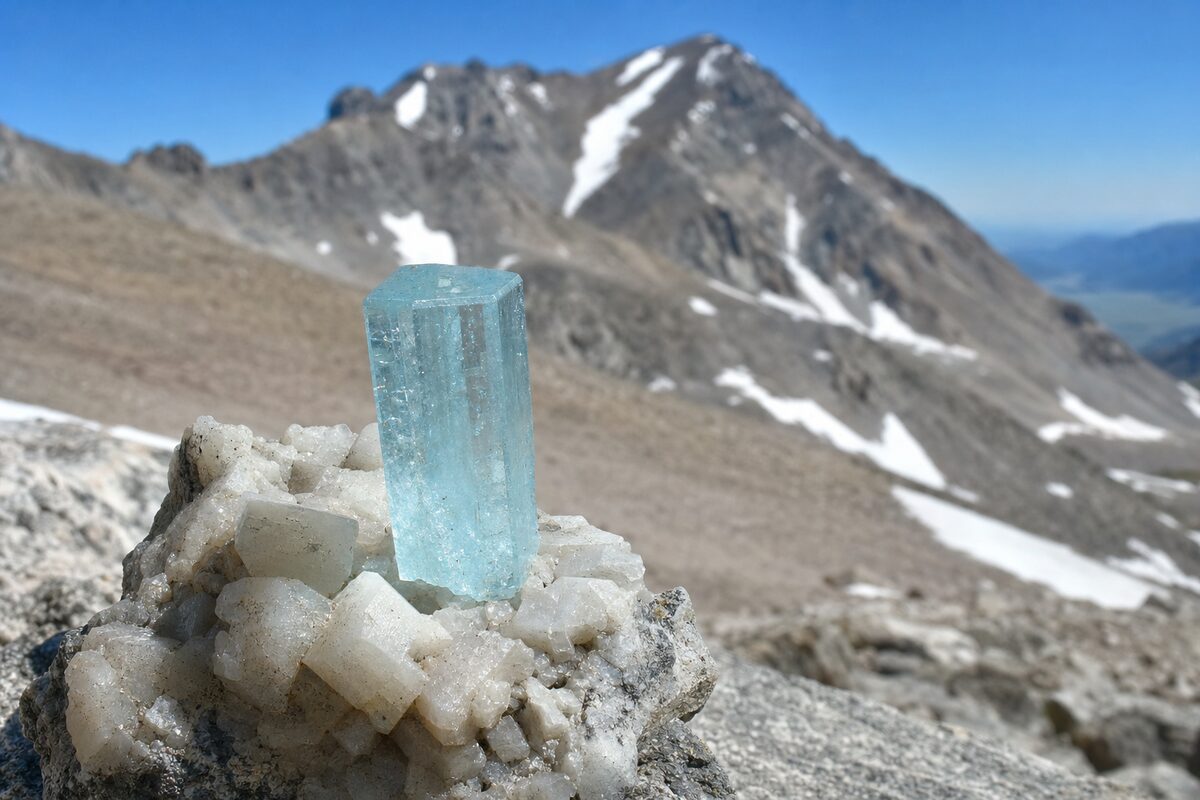
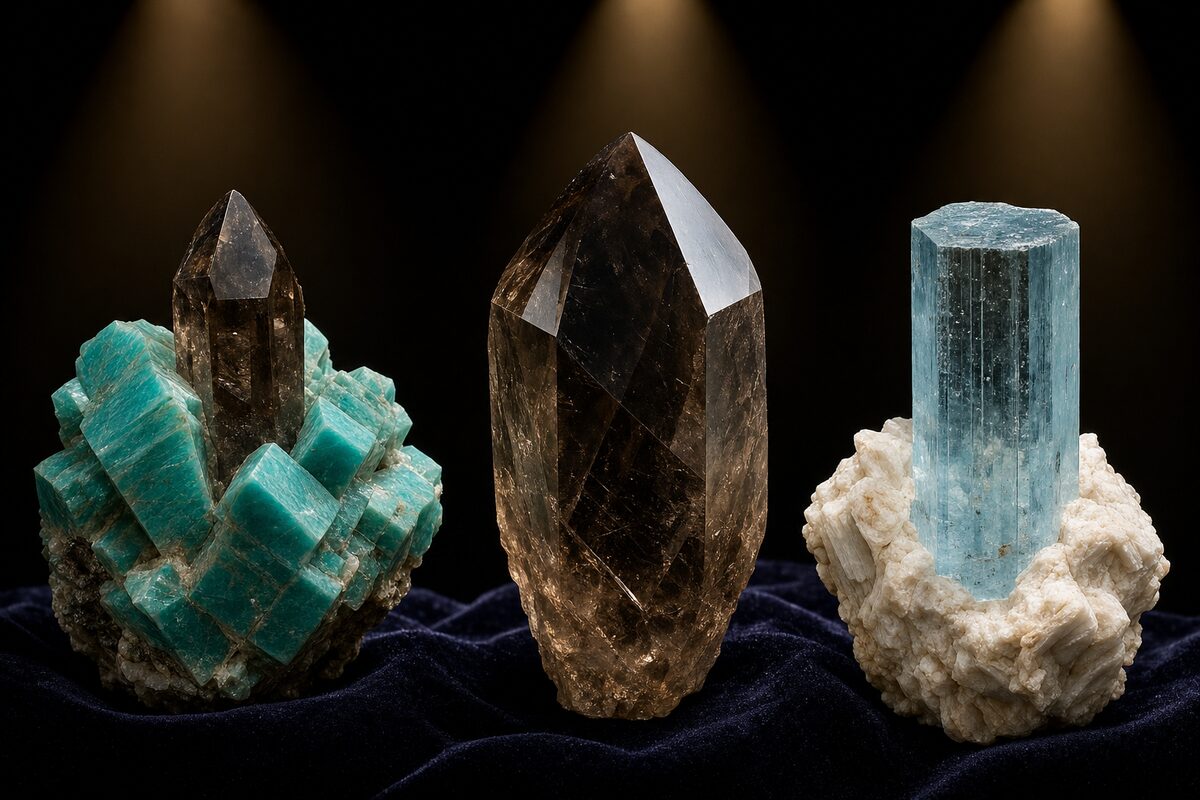
The result: deep blue-green amazonite (a variety of microcline feldspar) paired with gemmy, root-beer-brown smoky quartz. Sometimes white albite balls and the occasional cassiterite crystal. It’s a combination unique to this part of Colorado, and collectors worldwide consider it among the finest mineral associations on Earth.
The Pockets That Made the District Famous
Tree Root Pocket (Two Point Mine, 1997)
Surface fragments led miners to follow a pegmatite dipping at 25 degrees before it flattened into a horizontal lens two meters down. They breached the pocket within 30 minutes. Inside: a kidney-bean-shaped cavity roughly two meters long and wide, 20 centimeters high, sandwiched between thick layers of graphic granite.
Over eight days, the crew recovered about 100 cataloged amazonite-smoky quartz groups plus hundreds of individual crystals. The amazonite showed the deepest blue-green color seen at the mine, with smoky quartz crystals averaging six centimeters and some reaching 17 centimeters. Many pieces required repair due to roof-collapse damage, but the quality and quantity were unprecedented. The specimens debuted at the Denver Gem and Mineral Show in September 1997.
Key Hole Pocket (10 Percenter Claim, 1985)
Ten kilometers northeast of Two Point, miners opened a pocket large enough to park a small car inside. Hundreds of excellent amazonite specimens came out, many with white albite balls, including pieces over 75 centimeters across weighing more than 100 kilograms. Medium blue-green color, impressive scale.
The Museum Pocket (Hurianek Property, 1970s-80s)
Thelma Hurianek discovered a pocket on the family’s fee-digging property near Crystal Peak that was later reconstructed as an exhibit at the Denver Museum of Natural History. It remains one of the most famous single-pocket finds in Colorado mineral history.
What You’re Actually Finding
Not every pocket is a Tree Root Pocket. Most collecting in the Crystal Peak district involves patient surface work and shallow hand digging. Here’s what the pegmatites produce:
- Amazonite: Blue-green microcline feldspar. Color ranges from pale green to deep blue-green. The darkest material commands the highest prices. Found as singles, clusters, and combination groups.
- Smoky Quartz: Gemmy, root-beer brown to near-black. Often found growing alongside or through amazonite groups. The contrast is what makes these specimens iconic.
- Albite: White feldspar balls, sometimes perched on amazonite or scattered through pocket clay.
- Cassiterite: Rare but documented at the Two Point Mine. Small dark crystals, a nice bonus when present.
Color develops to the crystal core, and the best specimens show slight natural etching on faces with clean, glassy terminations on the quartz.
Collecting: Do It Right
The Crystal Peak district is heavily claimed. An estimated 90% of pegmatite-bearing ground around Lake George has active claims or sits on private property. That’s not an exaggeration. Here’s how to approach it responsibly:
Know the land status. Before you dig anywhere, verify whether the ground is BLM, National Forest, private, or claimed. The BLM’s LR2000 system shows active mining claims. Pike National Forest land has its own rules about surface disturbance. Ignorance isn’t a defense.
Get permission. Some claim holders allow collecting for a fee or by arrangement. The Lake George Gem and Mineral Club is the best way to connect with local claim holders and organized field trips. Members often have access to sites closed to the general public.
Respect old workings. The district has decades of hand-dug pits and some mechanized excavations. Stay away from the edges of old pits, don’t enter any excavation you didn’t make yourself, and watch for loose ground. Pit walls in decomposed granite can collapse without warning.
Leave no trace. Fill your holes. Don’t cut trees. Pack out everything you bring in. The Forest Service and BLM have shut down collecting areas in other districts because of surface damage and trash. Don’t be the reason it happens here.
Altitude and weather. Lake George sits at about 8,500 feet. The Two Point Mine area is at 2,700 meters (8,850 feet). Afternoon thunderstorms are almost daily in summer. Start early, hydrate, and get off exposed hilltops before the lightning arrives.
Planning a Trip
Prime collecting season runs June through September. The Lake George Gem and Mineral Club hosts an annual mineral show along Highway 24 that’s worth timing your visit around. If you want to collect seriously, membership in the club is the single best investment you can make.
For a broader look at Park County minerals including rhodochrosite, topaz, and gold, check our Park County minerals blog post. And if you’re new to the legal side of mining and collecting in Colorado, our Mining Guide covers everything from claim types to BLM filing requirements.
Questions about collecting in the Crystal Peak district? Get in touch.