Park County Minerals: Why Lake George Is Colorado's Rockhounding Capital
If you spend any time in Colorado’s mineral collecting community, one name comes up again and again: Lake George. This small town in Park County, tucked along Highway 24 between Colorado Springs and the South Park basin, sits at the epicenter of some of the most productive pegmatite mineral collecting in North America.
The Lake George Intrusive Center
What makes Lake George special starts about a billion years underground. The area sits within the Pikes Peak batholith, a massive body of Precambrian granite that intruded into the earth’s crust roughly 1.05 billion years ago. Within this batholith, smaller intrusive centers formed with higher concentrations of rare elements and more exotic minerals.
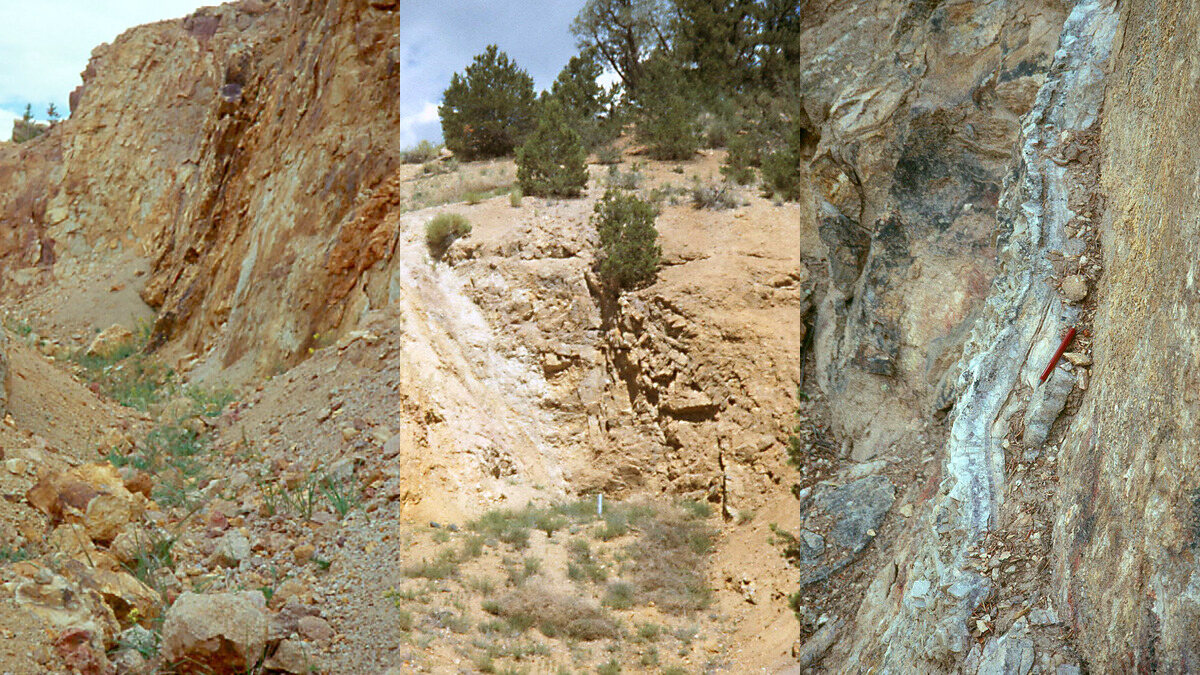
The Lake George intrusive center is one of these. As magma flowed into these zones, it formed concentric rings of varying composition. The pegmatite dikes that formed along the edges of these intrusive centers are where the best mineral specimens are found today.
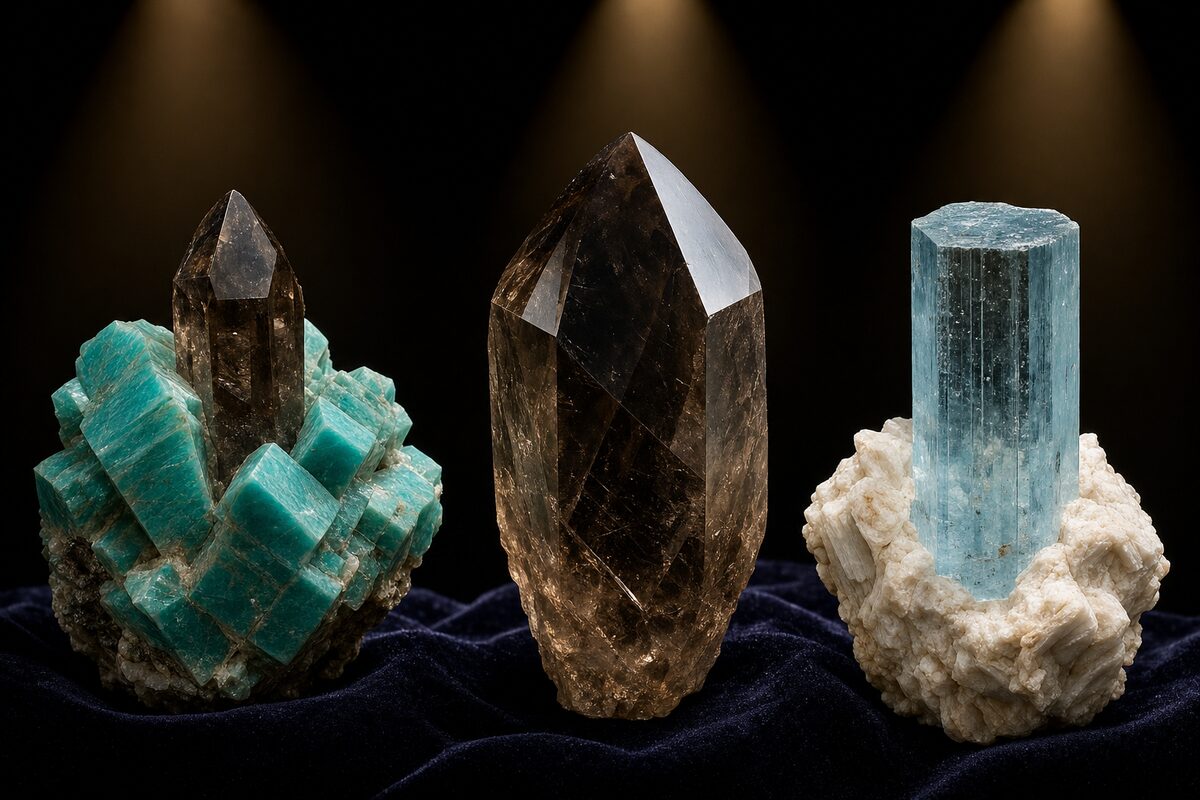
And the results speak for themselves. The area produces world-class specimens of amazonite, smoky quartz, topaz, fluorite, goethite, phenakite, and microcline. Some of the finest amazonite crystals in the world come from claims within just a few miles of Lake George proper.
What You’ll Find
Amazonite
The star of the Lake George area. These blue-green microcline feldspar crystals form in pegmatite pockets, often alongside smoky quartz. Lake George amazonite is known for its deep color saturation and well-formed crystal habits. The Chance Claim, NC No. 1 claim, and numerous other localities in the area have produced museum-quality pieces.
Finding amazonite takes patience and knowledge. You’re looking for pegmatite dikes in the granite, then following them to miarolitic cavities (gas pockets) where crystals formed. The best pockets can contain amazonite, smoky quartz, and occasionally fluorite together.
Smoky Quartz
Park County produces exceptional smoky quartz, sometimes in very large crystals. Specimens over 50 pounds have been documented. The smoky color comes from natural radiation exposure over geological time, and Lake George specimens are known for their deep, rich brown-to-black coloration.
Topaz
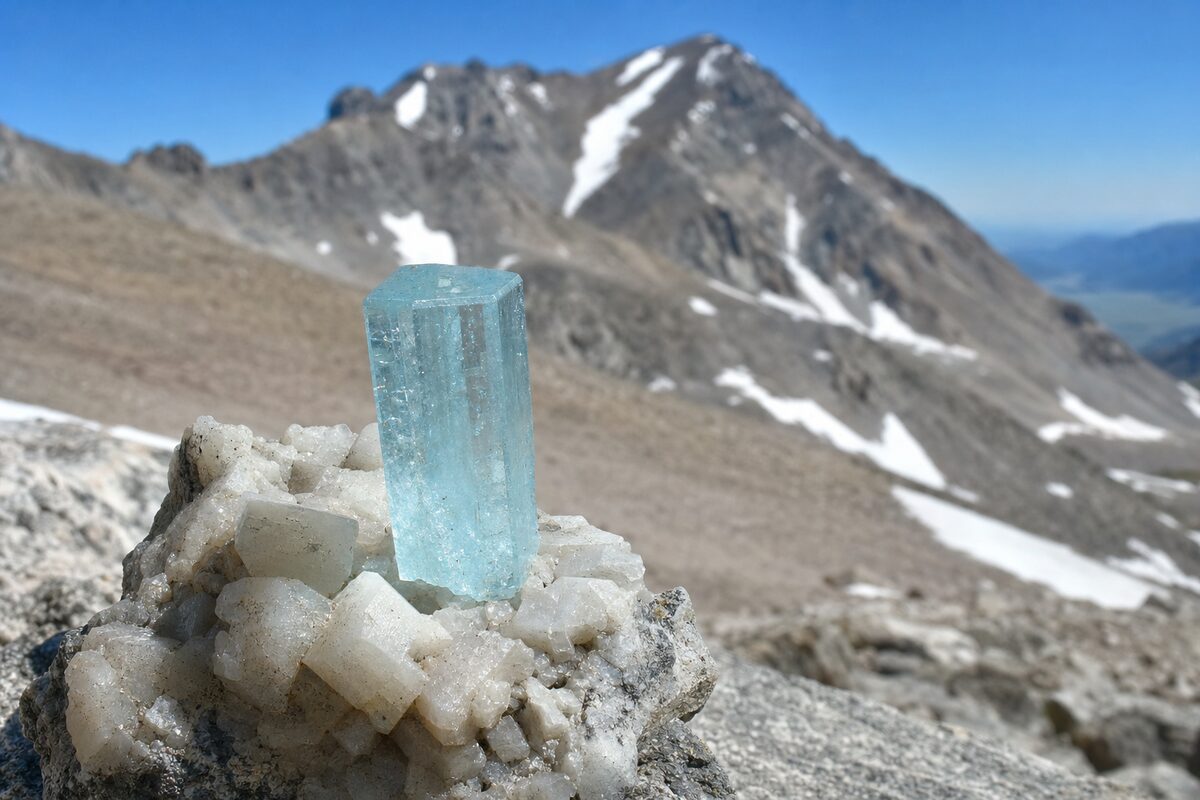
The Tarryall Mountains, about 12 miles north of Lake George, are a well-known topaz locality. The Topaz Mountain Gem Mine area and surrounding claims produce transparent crystals that range from colorless to pale blue to amber. Colorado topaz crystals have been found approaching five pounds in weight. Many are found in stream sediments and weathered granite rather than in hard rock, so prospectors screen for them rather than pound rock.
Fluorite
Multiple localities in the Lake George area produce fluorite, sometimes in spectacular crystal groups. Colors range from purple to green to colorless, and specimens are often found in association with amazonite and quartz in pegmatite pockets.
The Lake George Gem and Mineral Club
If you’re serious about collecting in the area, the Lake George Gem and Mineral Club is an essential resource. This not-for-profit Colorado corporation brings together hobbyists, serious collectors, and geologists who share an interest in rocks, minerals, fossils, and the geology of the Pikes Peak and South Park region.
The club hosts the annual Lake George Gem and Mineral Show, held along US Highway 24 in Lake George. It’s one of the best small mineral shows in Colorado, with dealers, displays, and field trip information all focused on local material. If you want to connect with people who know where to dig and what to look for, this is the place to start.
Members often have access to claims and collecting sites that aren’t available to the general public. In an area where an estimated 90% of pegmatite-bearing land is claimed, knowing the right people makes all the difference.
Park County Mining History
Minerals aren’t the only thing Park County is known for. Between 1859 and 1989, mines in the county produced over 9.4 million ounces of silver, 1.3 million ounces of gold, and millions of pounds of base metals worth over $470 million at modern prices. The USGS has documented over 235 mines and prospects in the county, with an estimated 600+ old workings. Half are concentrated in northwest Park County, where over 3,000 patented mining claims were once active.
The London Mine, Alma mining district, and numerous smaller operations left a legacy that mineral collectors and prospectors continue to build on today.
Planning a Collecting Trip
A few things to keep in mind:
- Respect claim boundaries. Most productive ground in the Lake George area is claimed. Always verify land status before collecting, and never dig on someone else’s claim without permission.
- Altitude matters. Lake George sits at about 8,500 feet. The Tarryall Mountains and other collecting areas are higher. Acclimate, hydrate, and watch the weather.
- Summer is prime season. Most collecting happens June through September. Afternoon thunderstorms are common, so start early.
- Join the club. The Lake George Gem and Mineral Club is your best connection to local knowledge, claim access, and field trips.
Whether you’re a first-time rockhound or a seasoned collector, Park County and the Lake George area offer some of the best mineral collecting opportunities in Colorado. The pegmatites are still producing, the community is welcoming, and there’s nothing quite like pulling a blue-green amazonite crystal out of a pocket you just opened yourself.
Check out our specimen gallery for examples of Park County minerals, or contact us if you’re interested in collecting opportunities in the area.