Leadville's Silver Boom: From Tabor to Today
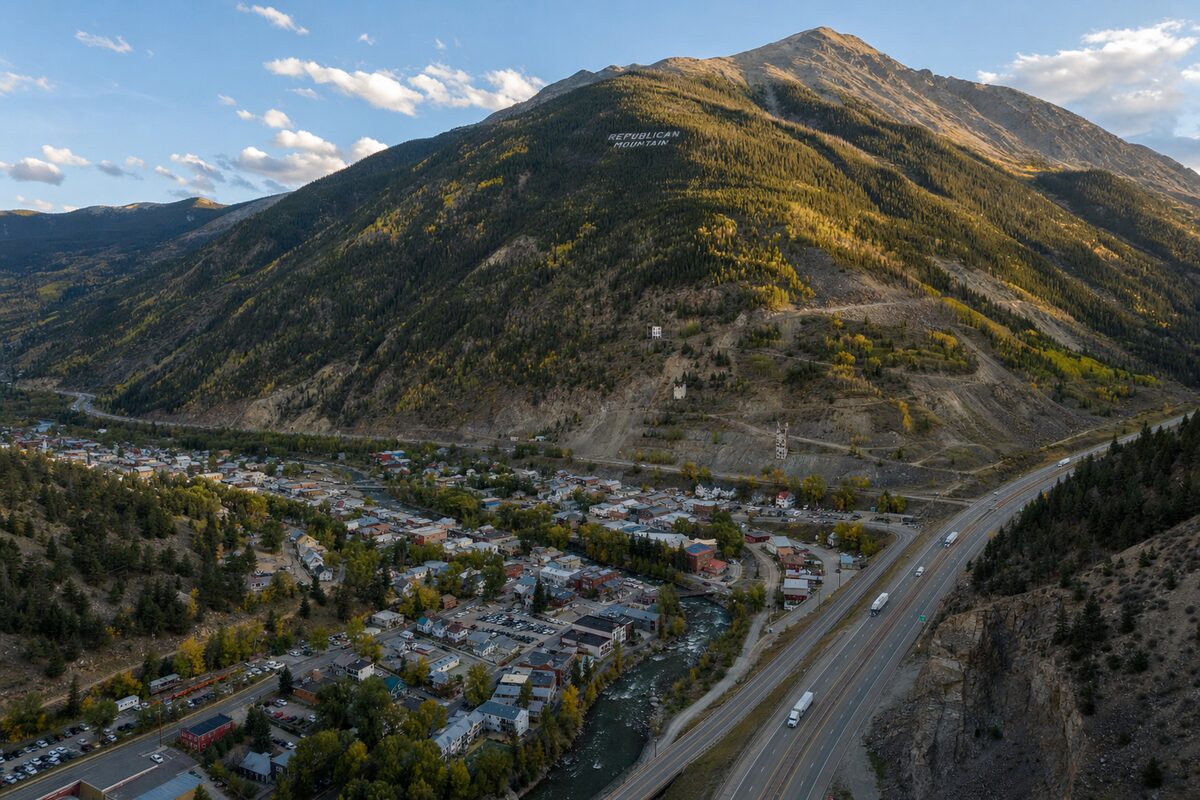
At 10,152 feet above sea level, Leadville is the highest incorporated city in the United States. In the late 1870s and through the 1880s, it was also one of the wealthiest places in the Western Hemisphere — a city of 30,000 people built on silver carbonate ore so rich that individual mines were generating millions of dollars a year.
The story of Leadville’s silver boom is inseparable from the story of Colorado itself. The wealth it produced funded the transcontinental railroad connections that opened the state, built the Tabor Grand Hotel and the Tabor Opera House, and attracted everyone from Oscar Wilde to gamblers and mine speculators from across the world. Then, in 1893, it ended — suddenly, catastrophically, and with consequences that still echo in Colorado’s economic history.
Understanding Leadville means understanding both the geology that made it possible and the human drama that played out on top of it.
The Geology That Built a City
Leadville sits in the upper Arkansas River valley, surrounded by mountains on all sides. The Mosquito Range rises to the east; the Sawatch Range — including Mount Elbert and Mount Massive, Colorado’s two highest peaks — looms to the west.
The ore deposits that made Leadville famous are what geologists call carbonate replacement deposits — a specific type of hydrothermal mineralization that forms where metal-bearing fluids interact with limestone host rock.
How Carbonate Replacement Deposits Form
The sequence goes like this: During the Paleozoic era, shallow seas repeatedly covered what is now Colorado, depositing thick sequences of limestone and dolomite. These carbonate rocks — chemically reactive, permeable along bedding planes and fractures — became ideal hosts for later mineralization.
During the Laramide Orogeny and subsequent volcanic activity, hydrothermal fluids moved through the region. Where those fluids encountered the carbonate host rocks, chemical reactions caused sulfide minerals to precipitate, partially or completely replacing the original limestone with ore minerals. The result was massive bodies of lead-silver sulfide ore — galena, cerussite, smithsonite, and their associated silver minerals — following the geometry of the original sedimentary layers.
The Carbonate Camp
The discovery that transformed Leadville from a played-out gold camp into a silver bonanza came in 1877, when metallurgist A.B. Wood and his associates recognized that the heavy black sand and grey rock that had been clogging Leadville’s sluice boxes for years — dismissed as worthless — was actually silver-bearing lead carbonate. Cerussite and smithsonite, the oxidized products of deeper galena ore, were what the miners had been throwing aside.
Once the carbonate ore was recognized and a smelting process developed to handle it, the rush was immediate. The Leadville mines began producing at a scale that stunned even experienced mining men. The Chrysolite, the Robert E. Lee, the Matchless — these mines were generating hundreds of thousands of dollars per month by 1880.
Horace Tabor: The Silver King’s Rise and Fall
No story of Leadville is complete without Horace Tabor. He arrived in the Colorado mountains in the late 1850s, part of the Pikes Peak rush, and spent twenty years as a marginal prospector and merchant in various mountain camps. By 1877 he was operating a general store in Leadville, extending credit and grubstakes to passing prospectors.
In 1878, Tabor grubstaked two prospectors — August Rische and George Hook — for $17 worth of provisions in exchange for a third share of anything they found. What they found was the Little Pittsburgh mine. Within months it was producing $8,000 per week. Tabor bought out his partners, sold the Little Pittsburgh for $1 million, and used the proceeds to acquire the Chrysolite and Matchless mines.
By 1880, Horace Tabor was worth an estimated $9 million. He built the Tabor Opera House in Leadville — a five-story showpiece that hosted performers of genuine national reputation — and then another in Denver. He became Colorado’s Lieutenant Governor and, briefly, a United States Senator.
Augusta and Baby Doe
Tabor’s personal life was as dramatic as his finances. He divorced his first wife, Augusta, in 1883 — a scandal that played out in the newspapers — and married Elizabeth “Baby Doe” McCourt, a beautiful young divorcée. The lavish wedding in Washington D.C., attended by President Chester Arthur, became a symbol of Leadville’s extravagance.
Augusta received a settlement of roughly $1 million. She invested it carefully and died wealthy. Horace did not.
The Collapse
The Sherman Silver Purchase Act of 1890 had committed the federal government to purchasing significant quantities of silver annually, supporting the price. When Congress repealed the Act in 1893 — in the midst of a broader financial panic — the price of silver collapsed within weeks.
Leadville’s ore was still there. But at the new silver prices, it wasn’t profitable to mine. The mills shut down, the miners left, and Horace Tabor, who had borrowed heavily against his silver properties, was ruined. He lost virtually everything — mines, opera houses, real estate — between 1893 and his death in 1899.
Baby Doe, faithful to the end, reportedly spent the final years of her life in a small cabin adjacent to the Matchless Mine, insisting on the mine’s value, surviving on charity from neighbors. She was found frozen to death there in 1935.
The Leadville Mining District After the Crash
The 1893 crash ended Leadville’s silver era but didn’t end its mining history. The district adapted.
Lead: The Leadville ores had always contained lead — galena, the primary ore mineral, is a lead sulfide. With silver prices depressed, lead became the primary economic product, and Leadville continued as a lead producer into the twentieth century.
Zinc: As metallurgy improved and zinc prices strengthened in the early twentieth century, zinc became a significant product from Leadville’s ores. The sphalerite (zinc sulfide) that had previously been mostly discarded became economic.
The Climax Molybdenum Mine: Not technically Leadville, but close — the Climax mine on Fremont Pass above town became the world’s largest molybdenum producer in the twentieth century. At its peak, Climax produced nearly three-quarters of the world’s molybdenum supply. The mine shaped the regional economy for decades and its tailings pond is still visible from the highway.
Leadville Today: History and Living Mining Heritage
Leadville today is a small city of about 2,700 people — a fraction of its 1880s peak, but still inhabited and still connected to its mining identity. The historic downtown, remarkably intact, is a National Historic Landmark District.
What to See
The National Mining Hall of Fame and Museum — One of the best mining museums in the country, with exhibits covering every aspect of Colorado’s mineral history. The hard-rock mining demonstration is particularly good.
The Matchless Mine — The mine that Tabor held on to till the end is open for tours. The original mine buildings and Baby Doe’s cabin are preserved.
Historic Harrison Avenue — The main street of Victorian-era Leadville, with surviving commercial buildings from the boom years.
Leadville, Colorado & Southern Railroad — A historic narrow-gauge railroad offering scenic excursions through the upper Arkansas valley.
Active Mining Heritage
The Leadville Mining District remains an active EPA Superfund site — the legacy of a century of mineral processing has left significant heavy metal contamination in the valley’s soils and waterways. The California Gulch site is one of the largest Superfund cleanup projects in Colorado.
That history is part of the story too. Mining created extraordinary wealth and left environmental obligations that last far beyond the last ore car. Modern mining practice and environmental stewardship reflect lessons hard-won in places like Leadville.
The mines made Leadville, the market unmade it, and the landscape remembers all of it. For the historically minded prospector, there’s no better classroom in Colorado.
Ready to explore Colorado’s other historic districts? Check our prospecting guide or browse specimens from Colorado’s classic mineral localities. And when you’re ready to stake your own ground, the mining claims page has everything you need to get started.