Silver Plume's Mining-Claims Buyout: How a Tiny Historic Town Protected Republican Mountain
If you’ve driven west on I-70 past Georgetown, you’ve seen Silver Plume. Maybe you blinked and missed it. Population around 210, tucked into a steep valley between Republican Mountain to the north and Pendleton Mountain to the south, the town is one of the smallest municipalities in the state. It’s also one of the most aggressive land-conservation success stories in Colorado over the past five years.
This is the story of how a 200-person town quietly bought up 217 historic mining claims totaling 553 acres on the mountains above it, and what it means for the future of mining claim land across Colorado.
The Setup: Why These Claims Mattered
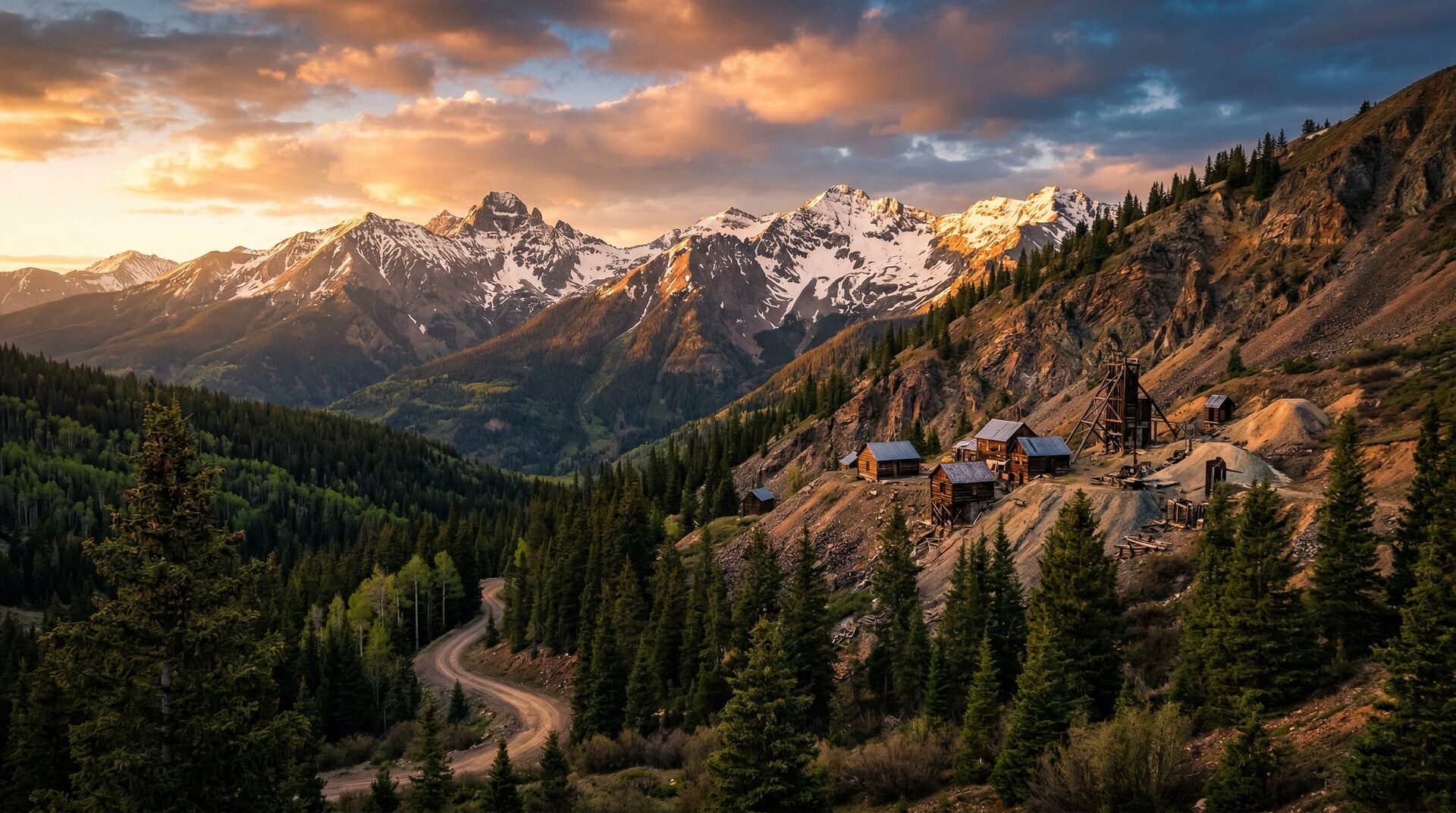
Silver Plume’s silver-mining boom ran from roughly 1864 to 1893, ending with the federal repeal of the Sherman Silver Purchase Act. At its peak the town had more than 2,000 residents. The hillside above Silver Plume — Republican Mountain — was covered in active mines: the Pelican-Dives, the Mendota, the 7:30, the Smuggler, and dozens of smaller operations. When the silver crashed, the people left. But the claims didn’t.
Mining claims, once legally located and maintained, are a property interest. They can be patented (converted to private fee-simple ownership), inherited, sold, traded, and held indefinitely. That’s exactly what happened above Silver Plume. The most productive ground on Republican Mountain ended up consolidated under two private families:
- The Jack Pine Mining Co. claims — about 95 patented and located claims totaling roughly 200 acres on the lower slope, owned through the estate of Fabian Watrous and the Jack Pine Mining Company since 1949.
- The Taylor-Kennedy family claims — 122 patented and located claims totaling about 350 acres on the upper slope above the Jack Pine ground, held by the Taylor and Kennedy families for generations.
Together that’s 217 claims, 553 acres of private land draped across the mountain directly above town. All of it sits inside the Georgetown-Silver Plume National Historic Landmark District, designated in 1966 to recognize the area as the place where 19th-century American silver mining techniques were developed. The land contains roughly 25 registered historic mining structures and 6 registered archaeological sites — tunnels, headframes, blacksmith shops, bunkhouses, and the remains of the operations that defined Colorado’s first silver-producing district.
These claims all carry MR-1 development rights under Clear Creek County zoning. Translation: any owner could legally build residences, cabins, or an adventure park on the steep terrain visible to roughly 25 million I-70 travelers a year. They could also reopen the mines for new extraction. Either path would have wiped out the historic district above town.
Round One: The Jack Pine Buyout (2022-2023)
In January 2022, the Jack Pine Mining Co. owners approached the Town of Silver Plume with an offer: $500,000 for all 95 claims, plus another $100,000 needed for legal and due diligence work. The seller was willing because they wanted the land protected, and they were willing to require a conservation easement as a condition of sale.
The town of 210 people had a year to come up with $600,000.
A board member at a town meeting put it to the trustees as a simple question: “Do you want to buy a mountain?” They said yes.
The funding stack ended up looking like this:
- $25,000 initial pledge from the Town of Silver Plume
- $200,000 from History Colorado’s State Historical Fund
- $100,000 from Clear Creek County Open Space Acquisition Fund
- The remainder from individuals, foundations, local corporations, and nonprofits — Mountain Area Land Trust, Colorado Open Space Alliance, Colorado Historical Foundation, the Georgetown Loop Historic Mining and Railroad Park, and dozens of private donors
By January 30, 2023, the funding closed and the purchase went through. The Colorado Historical Foundation accepted the conservation easement — a notable move, since traditional land-conservation easements protect natural landscapes, not mined ones. The Foundation and the town worked together for over a year to design what is, as far as I can tell, a one-of-a-kind conservation easement that protects a cultural landscape of historic mining structures alongside the natural terrain. The final easement document was signed in April 2024.
The result: Silver Plume Mountain Park North, 201 acres of permanently protected mining-claim ground at the foot of Republican Mountain, including the lower section of the 7:30 Mine Trail.
Round Two: The Taylor-Kennedy Acquisition (2024-2026)
In Fall 2024, the Taylor-Kennedy family put their 122 claims on the market. The property stretches from 9,200 feet at the north end of Silver Street up to 11,200 feet on Republican Mountain, directly above the Jack Pine ground the town had just bought. Same family-driven seller motivation, same town buyer, same playbook — but a lot more land and a much larger funding lift.
The appraised value came in at $875,000 ($2,500 per acre, the same price per acre the town paid for Jack Pine). The total project cost ran higher, around $1.337 million, including the land price, $245,000 in cash match, $325,000 in donated mineral rights from the sellers, and various in-kind contributions.
The funding stack this time:
- $300,000 from Great Outdoors Colorado (GOCO) — kick-started the effort in December 2025
- $100,000 from Clear Creek County Open Space — approved by the BOCC in early 2025 contingent on full funding
- Colorado State Historical Fund
- Mountain Area Land Trust (shepherded the deal, will hold the conservation easement)
- Dozens of individuals, history-focused nonprofits, and wildlife advocacy groups
The deal closed in early May 2026. With it, Silver Plume Mountain Park grew from roughly 300 acres to over 650 acres — and the town of 210 people now protects more than 3 acres of historic mining-claim land per resident.
Why It Matters Beyond Silver Plume
A few things make this story worth understanding even if you don’t care about Silver Plume specifically.
1. It’s a working model for retiring mining claims. Most Colorado mining-claim conservation runs into the same wall: the claims have development rights, mineral rights, and surface rights all tangled together, and standard open-space templates don’t accommodate the mining structures that often make the land historically valuable in the first place. Silver Plume worked through that with the Colorado Historical Foundation’s culturally-aware easement template. Other historic mining districts in the state are watching.
2. The 7:30 Mine Trail just got better. The 1.8-mile interpretive trail starts at the north end of Silver Street in town and winds in and out of the newly acquired parcels its entire length. With the Taylor-Kennedy purchase complete, the town can now extend the trail up Brown Gulch to connect with the USFS Bard Creek Trail two miles to the west. That opens up a much longer non-motorized loop through historic mining country.
3. The bighorn sheep herd is protected. The Georgetown bighorn sheep herd, managed in part through Colorado Parks and Wildlife’s nearby Georgetown Wildlife Management Area, uses the high parcels on Republican Mountain as winter range. Roads and development on those parcels would have fragmented critical habitat. Now it’s permanent.
4. The scenic backdrop of I-70 is preserved. The Georgetown-Silver Plume corridor is one of the most-driven scenic stretches in the state. The view of Republican Mountain framing the historic district was one phone call from a developer away from being subdivided. It isn’t anymore.
What You Can See There Today
Both park sections are open to the public for non-motorized use.
- 7:30 Mine Trail — starts at the north end of Silver Street. 1.8 miles, winds through about 25 historic mining structures including tunnels, shacks, and old bunkhouses. Stay on the trail, do not enter any abandoned workings.
- Future extension — Brown Gulch route up to the USFS Bard Creek Trail is in early planning. Expect signage and interpretive kiosks to expand over the next several years.
- Republican Mountain itself — accessible from the trail. Watch for the bighorn herd in winter; give them space.
Standard safety rules apply harder here than most places. The mining structures on this land are 130+ years old. Many of the shafts are not fully sealed. Wood timbers are rotten. Bad air collects in adits. The historic district designation does not mean the structures are safe to climb on or enter — it means they’re significant enough that the town went to extraordinary lengths to protect them from being demolished or developed over. Look, don’t touch.
A Note for Prospectors
If you’re reading this hoping for a tip on collecting in the Silver Plume area: don’t. The 553 acres now in Silver Plume Mountain Park are permanently protected by conservation easements. No surface disturbance, no mineral extraction, no rockhounding. The town spent five years and over $2 million making sure of that. Treat the area as a historic district and a wildlife refuge, not a collecting target.
For active mining-claim ground in Colorado where collecting is possible, see our Mining Claims 101 post on the legal framework, and our Park County minerals and Pikes Peak pegmatites posts for actual collecting destinations.
For the broader story of how Silver Plume fits into Colorado’s mining timeline, our Mining Guide covers the silver boom, the 1893 crash, and how those events shaped the modern Rocky Mountain landscape.
Questions about visiting Silver Plume or about Colorado mining-claim conservation? Get in touch.