Sweet Home Mine Rhodochrosite: The Alma District Story Behind Colorado's State Mineral
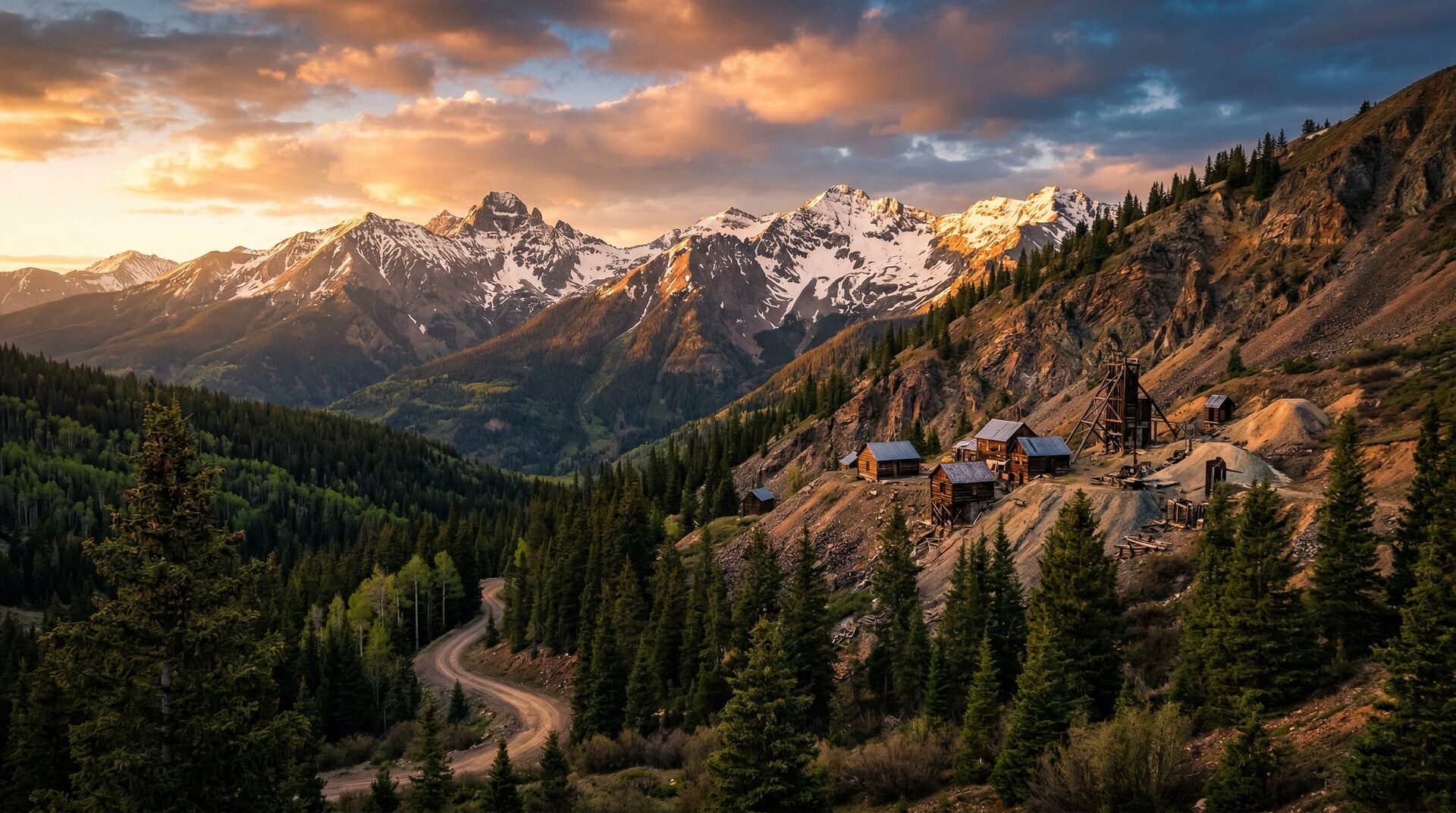
The Sweet Home Mine sits on the southern slope of Mount Bross above Alma, Colorado, between 11,300 and 11,600 feet of elevation. For most of its history nobody cared about it. It was a marginal silver mine that probably never turned a profit in its first two decades, and the bright red crystals lining the seams were treated as gangue — worthless rock that got in the way of the silver. By the time the silver market collapsed in 1893, the mine had closed.
Then collectors realized what those red crystals were. And over the next 130 years, the Sweet Home Mine became one of the most famous specimen mines in the world.
This is the story of how a failed silver mine produced Colorado’s state mineral, the legendary Alma King crystal, and a body of specimens that mineral collectors chase across continents. It’s also the story of why you can’t go see any of it in person right now — and what’s coming next.
From Silver Gangue to World-Class Specimen
Hard-rock mining in the Alma district started in 1861, late in the Pikes Peak Gold Rush, when prospectors traced placer gold up the South Platte headwaters and found gold-bearing quartz veins in Buckskin Gulch. By 1864 the easy gold was gone. Most miners moved on.
In 1871, silver outcrops were found near the summit of 14,172-foot Mount Bross. New rushes followed. The veins that became the Sweet Home Mine were discovered in 1873, and small short tunnels began chasing narrow, unpredictable silver-rich quartz seams along the mountainside.
The miners noticed the rhodochrosite. They had to — it was everywhere in the gangue. An 1876 federal mineralogical report called out the “very beautiful specimens” coming out of the mine. But beautiful didn’t pay, and Sweet Home’s silver veins were too narrow to compete with the bonanza districts down at Leadville. The mine struggled.
The 1893 silver crash effectively ended most Alma district mining. Sweet Home reopened briefly in 1922 and produced sporadically through 1929, with 1925 actually setting a silver production record for the mine. That same year delivered a major rhodochrosite pocket whose matrix pieces ended up in museum collections worldwide.
By the 1960s the silver was done. The rhodochrosite story was just getting started.
The 1966 Pocket, the 1980s Survival, and the 1990s Boom
In 1966 a miner opened a pocket reportedly seven feet tall, four feet deep, and two feet wide — its walls covered in rhodochrosite crystals seated on beds of quartz. He returned six weeks later to find that one of his workers had high-graded the entire pocket while the mine was closed for winter. Those specimens hit the collector market without the owner ever seeing them. One of them became the Alma Queen. The thief took the money, left his family, and disappeared.
That kind of story doesn’t help a mine’s reputation, but it did make the specimens famous. The World’s Finest Minerals, published in 1973, put the Alma Queen on its cover.
In 1980 a mining company leased the property hunting molybdenum. Prices crashed in 1981 and the lease lapsed without significant damage. Sweet Home survived to fight another day.
The real boom started in 1990. Bryan and Kathryn Lees of Collector’s Edge Minerals, along with several key investors, formed Sweet Home Rhodo, Inc. and signed a lease with the mine’s owner, Leonard Beach. The Lees ran the project scientifically — mapping fault systems and vein structures, using ground-penetrating radar to locate likely pockets, and treating each opening like an archaeological dig.
It worked. The 1990s produced rhodochrosite specimens that redefined what collectors knew was possible: the Alma Rose, the Ribbon, the Butterfly, and the Crystal Wall. And on August 21, 1992, a narrow pocket gave up the specimen that became the Alma King.
What Makes the Alma King the Alma King
The Alma King is a 16.5-centimeter rhombohedral rhodochrosite crystal — football-sized, deep red, translucent — perched on a matrix of clear quartz needles accented with blue fluorite, sphalerite, tetrahedrite, chalcopyrite, and pale yellow calcite. It is widely considered the finest single rhodochrosite specimen in the world.
What makes Sweet Home rhodochrosite different from rhodochrosite found elsewhere comes down to chemistry and form. Most rhodochrosite occurs as banded or massive material, often with significant iron or calcium substituting for manganese, which mutes the color. Sweet Home crystals are unusually pure — analyses have shown them to be possibly the purest rhodochrosite in the world by composition. They form sharp rhombohedra, often translucent to nearly transparent, with deep ruby-red color saturated all the way through.
Crystal habit, color, transparency, and matrix associations all stacked up at this one locality the way they didn’t anywhere else. That’s the short version of why a Sweet Home rhodochrosite specimen can sell for tens or hundreds of thousands of dollars while comparable-sized rhodochrosite from other localities sells for hundreds.
Why Rhodochrosite Is Colorado’s State Mineral
A group of Bailey High School students researched and lobbied for the designation in the early 2000s. Their work led to legislation that Governor Bill Owens signed into law in April 2002, making rhodochrosite Colorado’s official state mineral.
Note the distinction: rhodochrosite is Colorado’s state mineral, not the state crystal or state gem. (Aquamarine is the state gemstone, and snowflake-related symbols aside, Colorado does not formally name a “state crystal.") The state mineral designation is the relevant honor here, and Sweet Home Mine specimens are the reason it happened.
Handling and Care: Why Rhodochrosite Is Fragile
If you do end up owning a Sweet Home specimen or any rhodochrosite, treat it carefully. Two properties matter:
- Hardness: Rhodochrosite is 3.5 to 4 on the Mohs scale. That’s about the same as fluorite. A fingernail won’t scratch it, but a coin, a steel tool, or another mineral specimen easily will.
- Cleavage: Rhombohedral cleavage in three directions. A solid bump in the right direction can fracture a crystal cleanly along a cleavage plane.
Practical implications:
- Display behind glass. Dust with a soft brush, never a cloth that can catch on crystal edges.
- Avoid direct sunlight. Prolonged UV exposure can fade the red color.
- Don’t pack specimens loose. Use crystal cushion foam, not bubble wrap directly against the surface.
- Never wash with detergents or ultrasonic cleaners. Plain distilled water and a soft brush, sparingly.
- If you have to handle it, support the matrix, not the crystal. Always assume cleavage can let go.
These rules apply to all rhodochrosite. Sweet Home specimens are no more fragile than any other rhodochrosite, but they’re often worth orders of magnitude more, so the consequences of mishandling are higher.
Visiting Today: The Honest Picture
Now the part that often surprises people. You cannot tour the Sweet Home Mine, and you cannot collect there.
- The original Sweet Home Mine was permanently closed and sealed in 2004 after Collector’s Edge had recovered specimens through the Hedgehog and 4-20 pockets and concluded that all known targets had been worked out.
- The Detroit City Portal, opened in 2016 about 200 feet above the original portal on Mount Bross, was permanently closed in September 2024. No more specimens will be recovered.
- Both sites are on private property. The mine workings are sealed. The surrounding ground has been reclaimed.
- There are no public tours, no fee-digging operations, and no rockhound access at either location. This is not a “show your permit and pay $50” situation. It’s a closed-and-sealed-mining-property situation.
If you see a listing online for “Sweet Home Mine tours” — verify it carefully, because nothing legitimate is operating at the locality.
Where You Can Actually See Sweet Home Rhodochrosite
Until recently, the answer was simple: the Denver Museum of Nature & Science. The Alma King has greeted visitors at the entrance to the Coors Hall of Gems and Minerals for decades, alongside the Crystal Wall — a reconstructed seven-foot by eight-foot pocket display sprinkled with hundreds of Sweet Home rhodochrosite crystals.
Current status: The Coors Hall closed April 15, 2026 for an 18-month renovation and will reopen in 2027 as the Dea Family Gems and Minerals Hall. The Alma King and the Crystal Wall will return, and the museum has announced an expanded Sweet Home Mine experience including a six-foot wall of rhodochrosite crystals and immersive cave environments. While the hall is closed, some specimens will tour at events like the Denver Gem and Mineral Show.
Other places to see Sweet Home material in person:
- Denver Gem and Mineral Show (September) — dealers regularly bring Sweet Home specimens, and the museum is rotating pieces through the show during the renovation.
- Mineralogical Society of Colorado events and the Lake George Gem and Mineral Club show occasionally feature Sweet Home material from private collections.
- Collector’s Edge Minerals in Golden sells specimens from their Sweet Home and Detroit City inventory directly — see their website for current availability.
For prospectors interested in the broader Park County mineral story, our Park County minerals post covers Lake George amazonite, smoky quartz, and the Crystal Peak pegmatite district. And if you’re new to Colorado mining and mineral collecting in general, the Mining Guide walks through the legal and practical basics.
Questions about Colorado rhodochrosite or where to see specimens? Get in touch.