How to Actually Collect Amazonite + Smoky Quartz in the Crystal Peak District
Here’s the situation. You’ve seen the photos. Deep blue-green amazonite crystals from the Crystal Peak district, often with a smoky quartz crystal growing right through the middle of them, sometimes capped with fluorite. You’ve maybe read our Lake George amazonite post on the geology and the Tree Root Pocket discovery story. You’re sold. You want to go find some yourself.
This is the practical, do-this-not-that guide to making it happen — legally — in 2026.
The Hard Truth About Access
The Crystal Peak Mining District runs north of Florissant and Lake George across parts of Park and Teller counties. It is, hands down, the most productive amazonite locality in the world. It is also one of the most heavily claimed pieces of ground in Colorado.
The most productive specific localities — Smoky Hawk, Two Point, Icon, Lucky Lode, Honey Bee, Queen Bee, Specimen Rock, Sentinel Rock — are all on active patented and unpatented mining claims. Most are part of Joe Dorris’s Pinnacle 5 Minerals operation or are held by mineral clubs like the Mile High Rock and Mineral Society. Showing up uninvited and digging gets you cited by the Forest Service. The Pinnacle 5 website states this in plain language: “Digging of any kind and picking up minerals of any kind violate the Forest Service and State permits and Federal law. Unless you have specific written permission from me, Joseph L. Dorris, you do not have permission to dig or pick up minerals on our mining claims.”
You can’t just hike out there. So how do you actually collect?
The Realistic Paths
There are three legitimate ways to put your hands on Crystal Peak amazonite. Pick one.
1. Join a Colorado mineral club (the clean path)
This is the way. The Lake George Gem and Mineral Club, Colorado Springs Mineralogical Society, Colorado Mineral Society, Littleton Gem and Mineral Club, and Denver Gem and Mineral Guild all run organized field trips into the Crystal Peak district every summer. The trips usually go to one of three places:
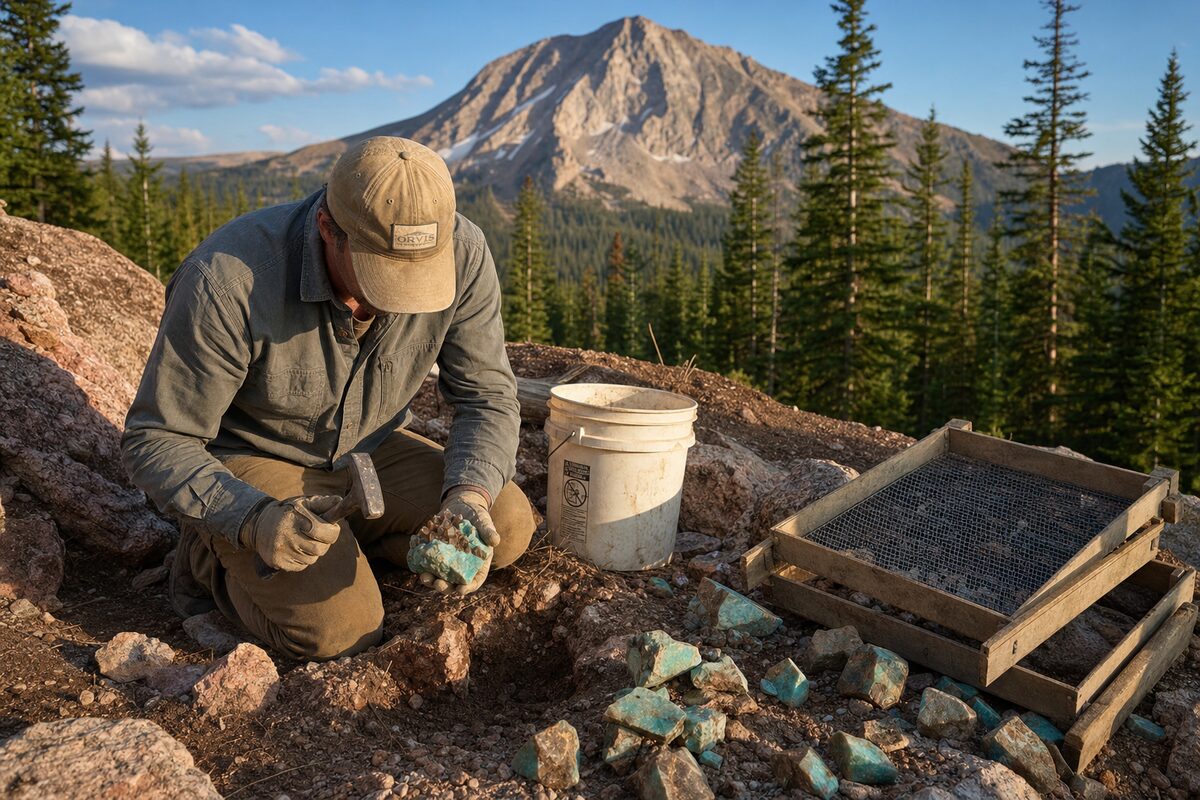
- Pinnacle 5 amazonite/smoky claims (Smoky Hawk and adjacent claims, Teller County). Club visits only, generally June through July, typically Fridays and Saturdays. You don’t pay Pinnacle 5 a fee — you’re their guest. You spend part of the day helping with active excavations and part of the day searching the tailings and disturbed areas for what you can keep. If you hit a wild pocket and it’s a combination amazonite/smoky, Joe Dorris keeps that one. Other pockets you generally get to keep.
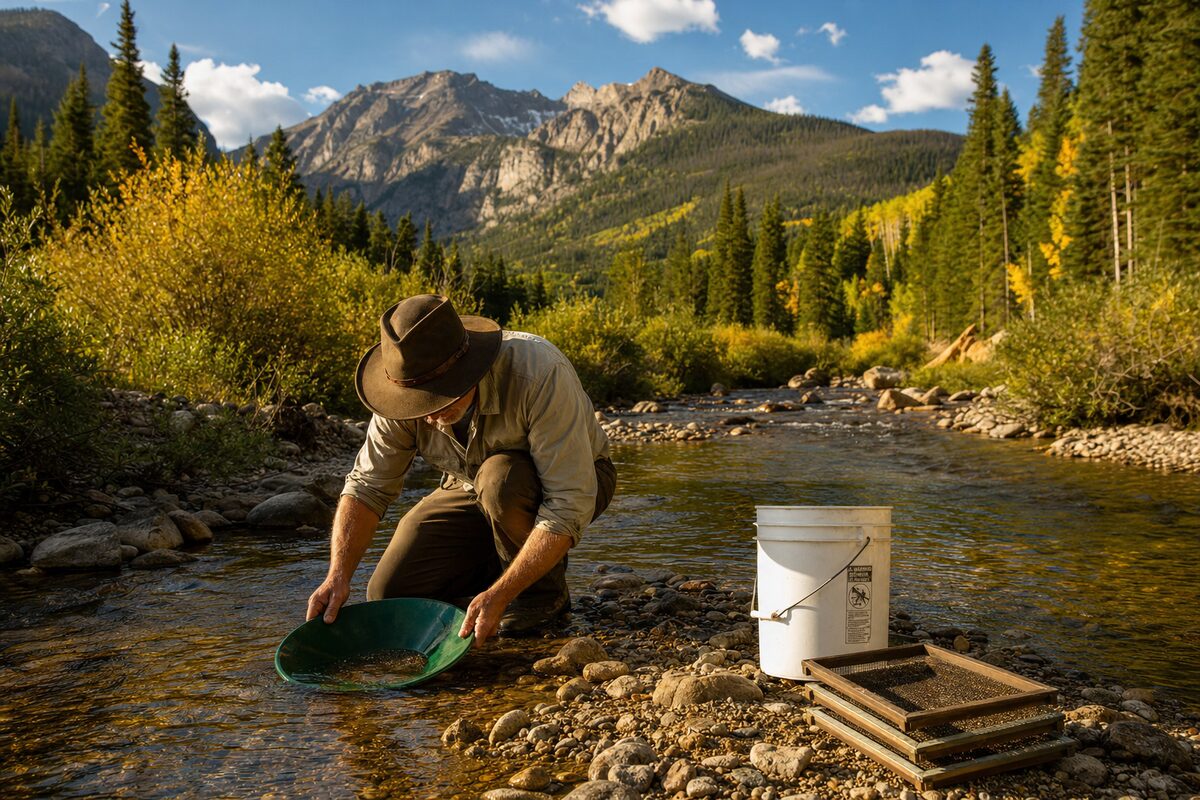
- Topaz Mountain Gem Mine (Joe Dorris placer topaz claim near Tarryall). This one IS a fee operation, usually about $50 per person for a bag of topaz-bearing gravel. You screen the gravel on-site. If you find high-quality topaz crystals, you may need to pay extra for them. Not Crystal Peak proper, but in the same district.
- Club claims (Harris Park, Honey Bee/Queen Bee, and others). Several Colorado mineral clubs hold their own active claims in the Crystal Peak district. Membership gets you onto those claims at organized club trips.
Annual dues for any of these clubs run $20–40. The Lake George club’s mineral show is the second weekend in August — admission is free, and it’s the best single day on the calendar to meet local claim holders, dealers, and field-trip leaders.
If you want to collect in the Crystal Peak district, do not skip this step.
2. Independent fee-dig operations
Outside of the club-only Pinnacle 5 visits, there are a few independent fee operations in the broader Lake George area that come and go year to year. The pattern is usually a private claim owner who opens part of their ground a few weekends per summer at $50–$150 per person for screening or limited surface collecting. These come and go depending on the owner’s mining activity, family situation, and how the season is going.
The honest truth: there’s no reliable, year-after-year fee-dig site for Crystal Peak amazonite specifically. Status changes summer to summer. Check the Lake George Gem and Mineral Club newsletter (lggmclub.org) for current-year listings, and watch the Pinnacle 5 Minerals site at pinnacle5minerals.com for any open-dig announcements (these are rare but they happen).
If you see a website promising “Topaz Mountain Adventures” amazonite digs — that’s a different operation in Utah, not Crystal Peak. Don’t book the wrong state.
3. Public collecting areas adjacent to the district
A few legitimately public spots exist near Crystal Peak where you can collect without a club affiliation or fee. Set your expectations: these are picked-over and the finds are usually small fragments, not pocket specimens.
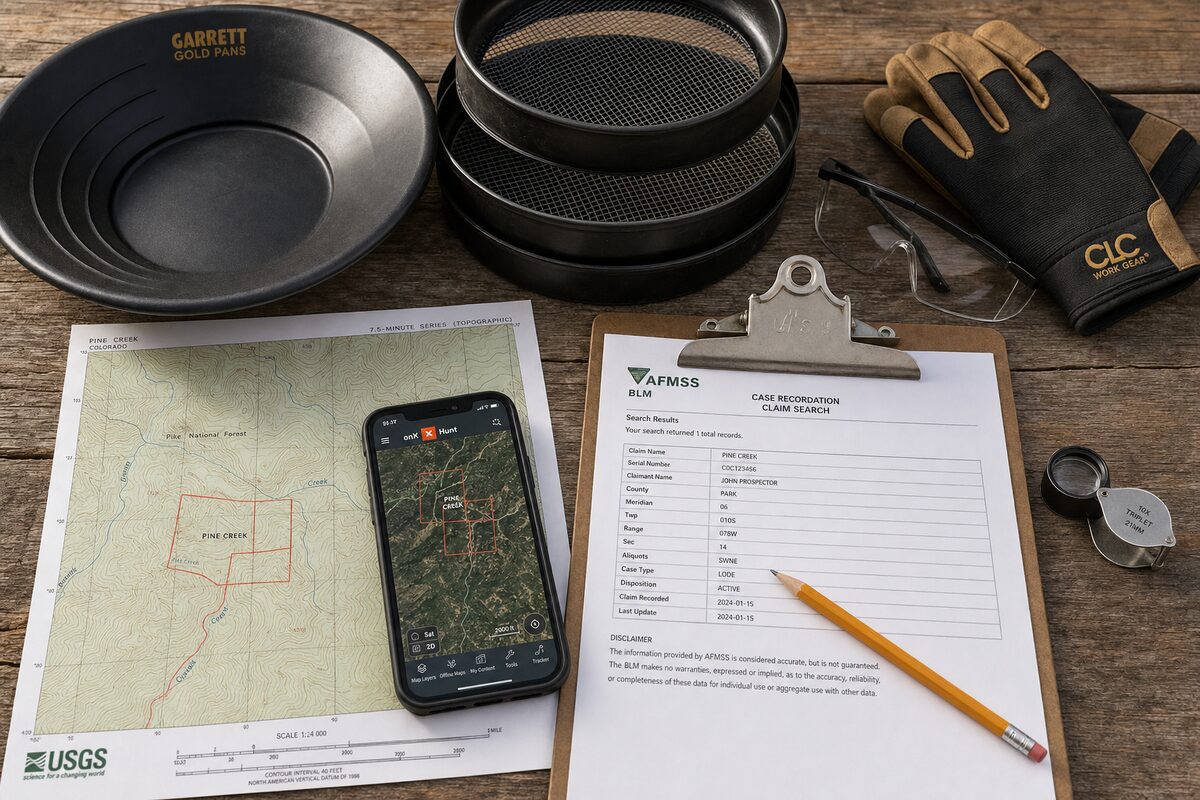
- Pike National Forest, unclaimed surface ground. Hand-tool surface collecting for personal use is generally permitted on USFS land that isn’t under active mining claim, with reasonable limits (typically capped at 25 pounds per year, hand tools only, no commercial sale). Verify with the South Park Ranger District (Pike-San Isabel National Forest, 719-836-2031) which specific parcels are open before any trip. The active-claim map changes constantly.
- Devil’s Head (Pike National Forest, Douglas County). A historic pegmatite collecting area on USFS ground with smoky quartz and occasional amazonite chips. Steep hike up to the lookout, then collecting in the surrounding country. Many of the historic spots are now claimed; the unclaimed ground is well-worked.
- Spruce Grove Campground area (Tarryall Mountains). Historic topaz and smoky quartz collecting on a mix of Forest Service and claimed ground. Fee camping, then hike to the collecting areas. Same warning — the productive ground is mostly claimed; the unclaimed scraps are well-worked.
These spots can produce small finds for a patient collector with a screen and a good eye. They will not produce a pocket-grade amazonite-smoky quartz combination specimen. That’s not how the district works for non-claim-holders.
When to Go
Crystal Peak collecting is seasonal. The pegmatites sit between 8,500 and 11,000 feet. Realistic window:
- June 1 to August 1: Prime season. Most club trips and Pinnacle 5 visits operate in this window. Snow is gone, ground is workable, afternoon weather is the main hazard.
- August to mid-September: Still possible but unpredictable. Monsoon thunderstorms hit hard and fast in August. Trips often get called early for lightning safety.
- Mid-September to late October: Dry, cool, beautiful. Limited club trips this late but doable on warm days. Snow can show up any time.
- November through May: Mostly snowed in. Don’t try.
The Pinnacle 5 claims open at 9 AM and close at 4 PM on visit days. Most club trips meet in Lake George or at the USFS gate by 8:30 or 9 AM, then convoy in.
What to Bring
Pack like you’re going to spend a long day on a mountainside, not like you’re going to a hardware store. Realistic kit:
- Rock hammer (Estwing 14 oz or 22 oz)
- Chisel set (3/8” and 1/2” cold chisels, hand-protected handles)
- Small pry bar (12–18")
- Screwdriver and dental picks for delicate pocket work
- 1/4” and 1/8” classifier screens for working tailings
- Bucket for hauling material
- Safety glasses (mandatory — chisel work throws chips)
- Gloves (work gloves plus a thinner pair for sorting)
- Hard hat if you’re near any kind of excavation wall
- Specimen wrap — toilet paper, paper towels, small boxes. Amazonite chips against amazonite in your bucket means broken edges.
- Camera or phone, ideally with macro mode, for documenting pockets in situ
- Notebook and pen for recording locality info
- Plenty of water (1+ gallon per person)
- Sunscreen, hat, layers — high-altitude sun is brutal even when it’s cool
- Lunch and snacks
- First aid kit
- Rain gear — afternoon storms are nearly guaranteed in summer
Don’t bring power tools, explosives, or any kind of mechanized equipment to a club trip. The claim owners’ permits don’t cover that, and showing up with a generator and a rotary hammer is a fast way to never be invited back.
On-Site Etiquette
A few things that will get you respected by the claim owners and trip leaders:
- Sign the liability release before you arrive. Pinnacle 5 and most claim holders require this. Print it, sign it, bring it. Asking to do paperwork at the gate slows everyone down.
- Listen to the safety briefing. The mine operator will tell you where you can and cannot dig. Stick to the designated areas.
- Report pocket finds. If you hit a cavity with crystals, stop digging and find the trip leader or mine operator. Pockets need to be excavated carefully or specimens get destroyed. Reporting a pocket also means the operator can confirm what you keep — usually generous, but they reserve premium combination pockets.
- Don’t take more than your share. Even when you can keep what you find, hauling out a backpack full of chips that other people could have screened is bad form.
- Backfill your holes. Forest Service rules require it. Trip leaders enforce it.
- Pack out everything you brought in. Including trash that wasn’t yours when possible.
- Don’t sell what you collected. Pinnacle 5’s permits explicitly classify club visitor activity as personal prospecting, not commercial collecting. Specimens you take home are for your collection. Don’t put them on eBay.
- Tip the trip leader. Club leaders organize these trips on their own time. A small tip or a thank-you note matters.
Realistic Expectations
Most first-time club visitors to a Crystal Peak claim go home with: a handful of broken amazonite chunks, a few smoky quartz crystal fragments, maybe a single intact crystal an inch or two long, and a great story. That’s a successful trip.
The big pocket-grade specimens — the ones with display-quality crystal groups — are the exception, and they almost always come from active mining work, not from hobbyist screening. Pinnacle 5 produces those because they’re a professional mining operation. You’re collecting on what they’ve already worked through.
That said: people do find good stuff. A repeat visitor who knows where to look and has put in five or ten trips can absolutely come home with a museum-quality piece. The luck-versus-experience curve at Crystal Peak is steep, but it’s not zero.
Where to Go Next
If you want to read up on the deeper geology and the legendary pocket discovery stories from the Crystal Peak district, our Lake George Amazonite + Smoky Quartz post covers the Tree Root Pocket and Key Hole Pocket finds. For the broader regional context, Park County Minerals sets the geological stage. For the legal framework around mining claims and collecting, see our Mining Claims 101 post and the full Mining Guide.
If you’re ready to actually do this: pick a Colorado mineral club, pay the dues, get on a field trip list. That’s the entire playbook. Everything else flows from there.
Questions about Crystal Peak collecting or club membership? Get in touch.